

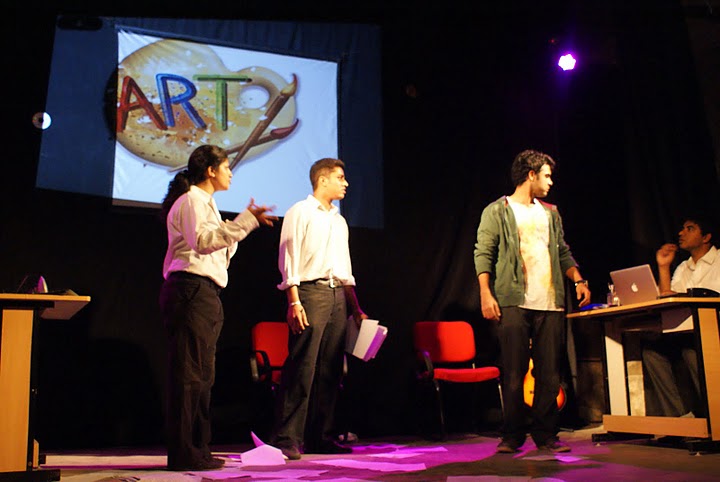
What’s to say that many many years later, perhaps centuries later, there is a Day of Dominic Wesley? Like you know, Day of the Dead, St Patty’s Day, Sun Day. Except not religious. This here is spiritual. You look inside yourself (symbolic only, mental and emotional look-inside).
You see, Dominic Wesley has raised some questions. What we aimed to do or should I say, achieve with DW, I cannot really remember. A lovely breeze was blowing that day, the Sun hid behind clouds making it easy for the actors to have a technical run before the show. Sod’s law meant it would rain, the evening ruined, people cursing softly and the little cafe attached to the open-air audi crowded with disappointed theatre patrons. The law of averages came into play that day. This is how: Hyd has hardly seen a big number of writers, especially in English, come out. Which is strange, because its a city of stories. You walk out of the door and you find a story there, sitting in front of you.
Strange again, that an agoraphobic writer had to have a story bite her nose a couple of times before she realized-she had to finish it. She had to tell this story. Audience at DW will tell you it isn’t much of a story. That is because it is, in all probability, their story, turned slightly to the left and titled to a 43 degree angle. The plane and the axis changed, the perspective of the writer is *slightly* twisted. But it is their story all right.
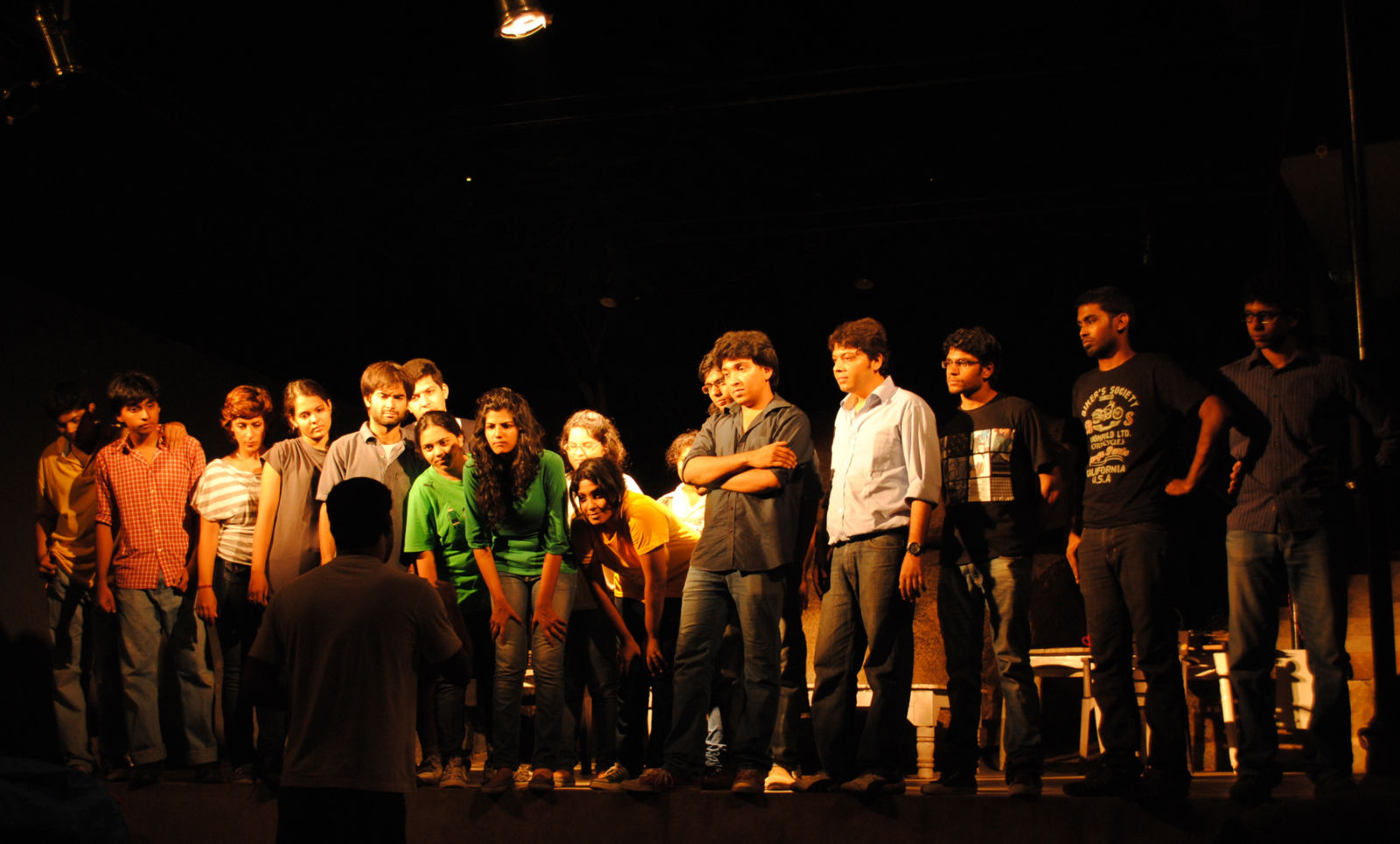
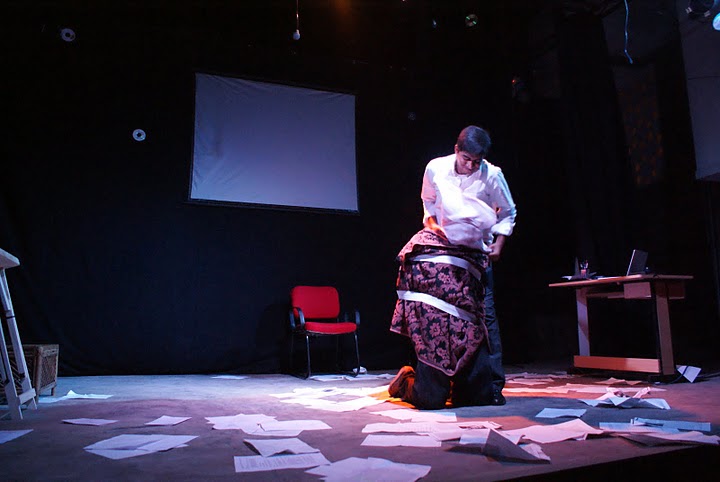
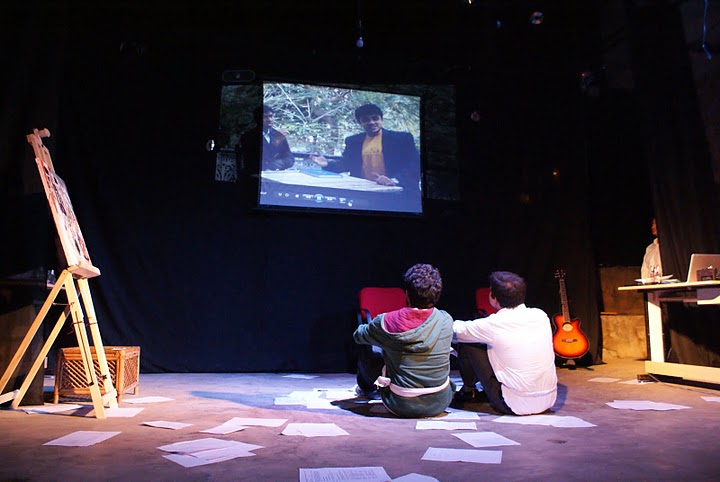
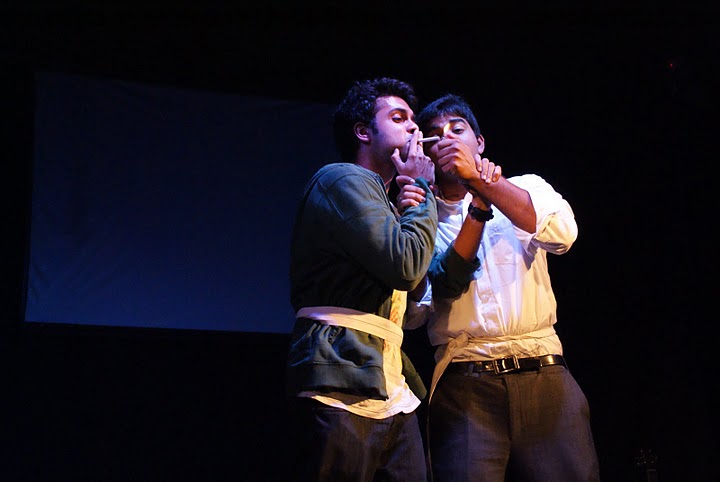
Stu Denison, director, had already directed the highly appreciated Unlucky-An Evening with Samuel Beckett for Samahaara a month earlier. Rathna Shekar Reddy, producer and Co-founder, Samahaara is a man on a mission (another post for that). The duo did four things for the play: Added a multimedia bit (Stu’s trademark), Slides in the second act, Instillation art to emphasize the absurdity (?) and basically ensured that the play does not remain in the pages of writer Anjali Parvati Koda’s messy notebook.
The reaction to DW has been completely unexpected, to say the least. People discussing, debating, talking about a piece of literature. Did this still happen? Wasn’t that the dinosaur Hyd, the one that we famously lost? No, then. If you gave someone something to talk about, they do. And they are still talking. Which is what, looking back, we would have wanted, but the idea didn’t even cross us. The actors were much loved, the new format interested the audience and the play itself entertained. But that’s the least of it. People are talking, still talking. Where is the Like button on the universe?